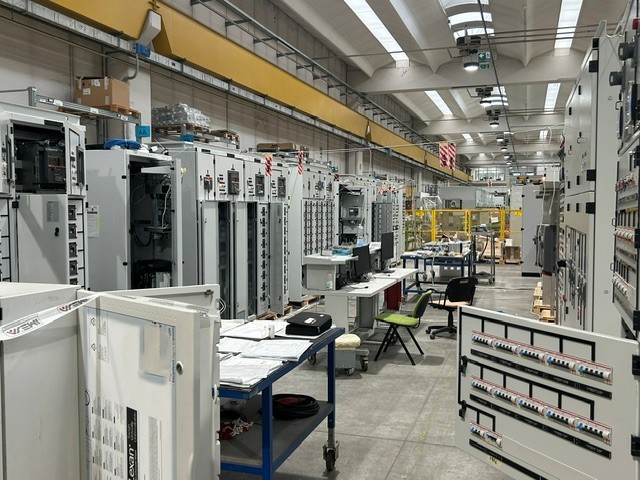

When discussing Transition 5.0, attention often focuses on software, automation, and new digital systems. In reality, a decisive part of energy efficiency comes into play much earlier — within the electrical infrastructure that powers the factory. If the distribution system is outdated, poorly monitored, or designed without advanced measurement and control logic, even the best software operates on a fragile foundation. For this reason, Transition 5.0 cannot be viewed solely as a digital upgrade. Above all, it is a matter of energy infrastructure quality. The ability to measure consumption, analyze the electrical behavior of loads, reduce losses, and properly integrate field data depends largely on the electrical panels and distribution architecture installed within the plant.
In this scenario, IMESA electrical panels play a strategic role. They are not simply systems for protection, switching, and distribution, but solutions designed to support energy monitoring, operational continuity, and plant modernization — three key elements for any company aiming to approach the Transition 5.0 pathway in a practical and concrete way.
What Transition 5.0 Requires from an Energy Perspective
Transition 5.0 links industrial investments to measurable energy-efficiency objectives. This means that simply introducing a new technology is not enough to automatically qualify for incentives. Companies must demonstrate, through verifiable technical criteria, that the intervention produces a reduction in energy consumption. This is precisely where the role of electrical infrastructure becomes crucial. Measuring results requires reliable, continuous, and readable data. Without a distribution network capable of collecting electrical parameters at a granular level, it becomes difficult to clearly demonstrate where savings are generated, which lines consume the most energy, which loads create inefficiencies, and where waste is concentrated. Transition 5.0, therefore, does not begin only with process digitalization, but with the ability to build an advanced electrical foundation that makes processes measurable and manageable.
Why the Electrical Panel Is Central to Energy Efficiency
In an industrial facility, the electrical panel is the point where energy, protection, measurement, and control converge. If this level is outdated, the company loses visibility over actual consumption and reduces its ability to optimize energy performance. A modern electrical panel, on the other hand, allows the collection of detailed data on power flows, load peaks, abnormal consumption, and power quality. This makes it possible to analyze plant behavior more accurately and intervene on losses, imbalances, and inefficiencies that often remain invisible in traditional infrastructures. For this reason, when developing a project aligned with Transition 5.0, the electrical panel is not a secondary element. It is an operational tool that enables energy monitoring and, consequently, the technical demonstration of the improvements achieved.
Energy Monitoring, Power Quality, and Data Collection
One of the most important aspects for companies investing in energy efficiency is the availability of reliable electrical data. It is not enough to know the facility’s overall consumption. A more detailed analysis is required — one capable of distinguishing between departments, production lines, utilities, and specific electrical behaviors.
The integration of measuring instruments and sensors within electrical panels makes this level of analysis possible. Parameters such as voltage, current, active energy, reactive energy, power factor, and Power Quality become operational information rather than simple control values. In this way, companies can identify more precisely where overloads, phase shifts, voltage drops, or energy waste are occurring. This approach is also essential from a documentation perspective. The ability to collect historical and consistent data helps create a solid technical foundation for the evaluations required in energy-efficiency programs and investment verification processes.
Digital-Ready Electrical Panels and Integration with Business Systems
An updated electrical infrastructure must be able to communicate with the rest of the industrial ecosystem. For this reason, the most advanced electrical panels are designed to integrate with supervisory systems, energy management platforms, and automation architectures already in place within the company. The use of standard communication protocols allows data to be transferred from the field to higher control levels, making the electrical panel an active part of the plant’s energy strategy. This does not simply mean reading data remotely, but creating informational continuity between electrical distribution, production processes, and efficiency management. Within the context of Transition 5.0, this interoperability has a very specific value. It enables the connection between physical infrastructure and optimization goals, creating a system in which energy data does not remain isolated but actively contributes to operational decisions and improvement actions.
Modernizing Electrical Infrastructure and Reducing Inefficiencies
Many industrial energy inefficiencies do not depend on a single machine, but rather on layers of issues that accumulate over time. Inefficient distribution systems, outdated components, excessive heat dissipation, non-optimized protections, and limited diagnostic capabilities lead to higher-than-necessary energy consumption and increase the risk of downtime. Modernizing electrical panels allows companies to intervene precisely at this structural level. A more advanced infrastructure improves thermal management, reduces losses, increases protection selectivity, and stabilizes overall plant performance. At the same time, it provides companies with a much greater ability to understand what is truly happening from an energy perspective.
This step is important because it connects the concept of efficiency with operational resilience. A more modern electrical panel is not only designed to consume energy more efficiently, but also to ensure greater operational continuity, protect connected machinery, and reduce exposure to failures or anomalies that can generate significant indirect costs over time.
Transition 5.0, Incentives, and Industrial Electrical Infrastructure
One of the most common misconceptions is that incentives related to Transition 5.0 mainly concern software or advanced automation. In reality, the ability to demonstrate a concrete improvement in energy efficiency often depends on the quality of the infrastructure supporting the production system. If there is no electrical network capable of reliably measuring, recording, and communicating operating parameters, it becomes more difficult to transform a technical intervention into a demonstrable result.
From this perspective, the electrical panel is not simply a plant component, but one of the conditions that makes the entire efficiency project credible and verifiable. For companies, this means that investing in smart electrical panels is not only an immediate technical improvement. It also means preparing the facility for an industrial model in which monitoring, efficiency, digital integration, and documentation compliance must evolve together.
Preparing the Plant for Renewables, Energy Storage, and New Electrical Loads
Upgrading electrical infrastructure has a value that goes beyond a single project. A panel designed according to modern standards makes the plant more prepared to integrate future developments such as renewable energy systems, energy storage solutions, new electrical loads, and more advanced energy management architectures. This aspect is particularly relevant for companies undergoing a gradual transformation process. Improving electrical distribution today means creating a stronger foundation for future developments, preventing innovation from being limited by inadequate infrastructure.
From this perspective, Transition 5.0 is not only about accessing incentives. It is about building a facility that is more transparent, more efficient, and better prepared to absorb the energy and production transformations of the coming years
IMESA’s Role in Energy-Efficiency Projects
For IMESA, the electrical panel is the point where energy efficiency becomes a concrete and measurable possibility. Designing advanced distribution systems means providing companies with a technical foundation capable of supporting monitoring, reliability, and industrial growth. Within the context of Transition 5.0, this approach is particularly significant because it addresses innovation in a structural way — not as a collection of disconnected technologies, but as the coherent development of an electrical infrastructure that makes the production system more efficient, more controllable, and more ready to evolve.