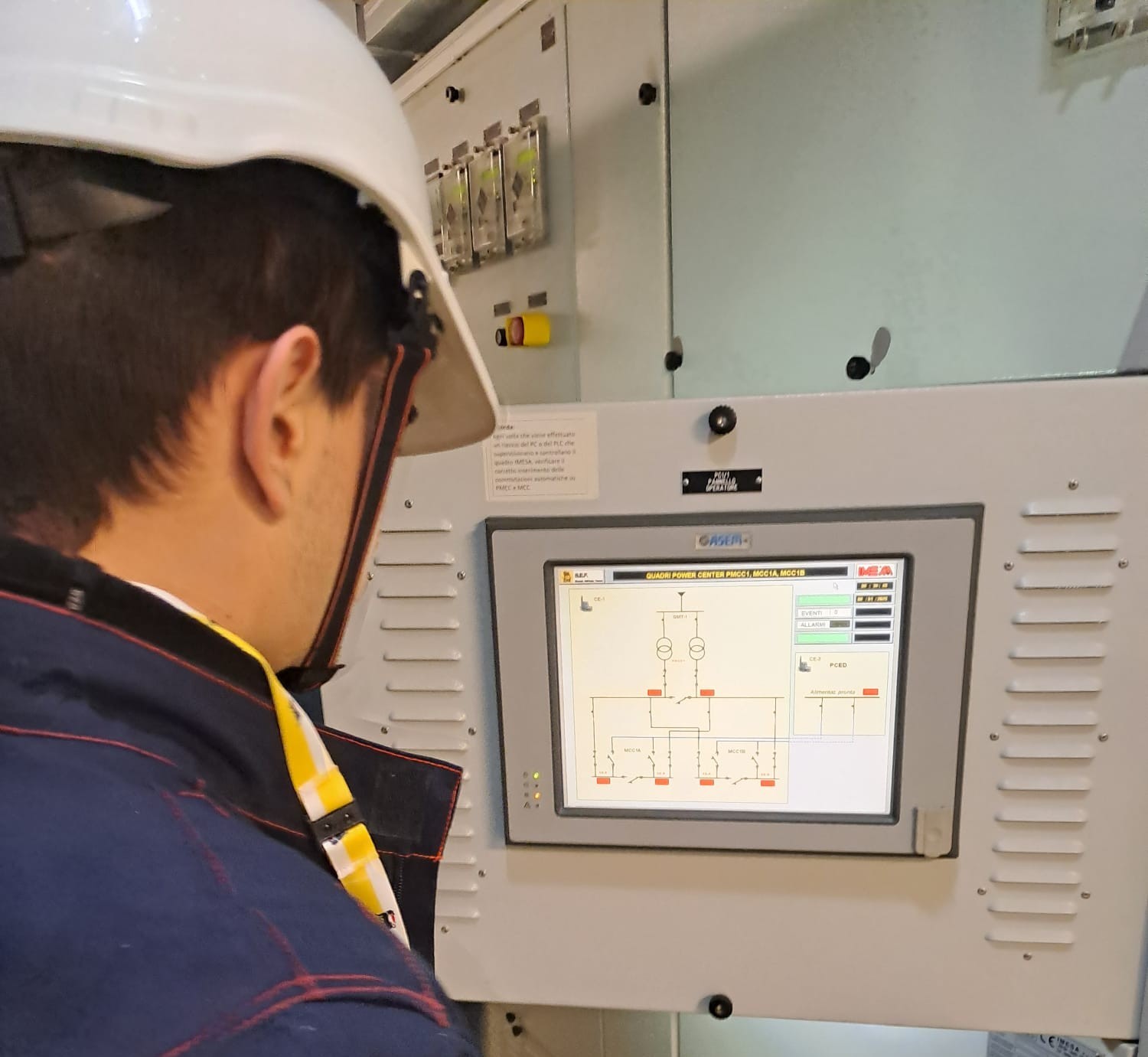

The digitalization of electrical infrastructure is changing the role of the switchboard within a system. It is no longer simply the point where energy is distributed and protected. Increasingly, it is also the point where data is collected, anomalies are detected, monitoring logic is developed, and more advanced maintenance strategies are enabled. This is why today, digital-ready switchgears mean integrating electrical distribution, supervision, and diagnostics. In industrial, naval, and critical infrastructure settings, this evolution has a direct impact on service continuity, consumption readability, the ability to prevent failures, and system lifecycle management. A digital-ready switchboard is designed to communicate with SCADA systems, monitoring platforms, and IoT architectures without being treated as a separate element from the rest of the system. Its function, therefore, goes beyond power distribution, but extends to the collection and transmission of information useful for operational and maintenance control.
What does digital-ready mean in an electrical switchgear?
Defining an electrical panel as digital-ready doesn’t mean adding a few measuring instruments to a traditional framework. It means designing the switchgear so it can acquire, organize, and transmit useful data about its own operation and that of the connected devices. This approach involves both hardware and information architecture. On the one hand, coherently integrated measuring devices, sensors, and communication components are needed. On the other, a structure capable of making that data readable by the supervisory system and truly usable by those managing the system is needed. This is the key point. A digital-ready panel does more than simply indicate whether a switch is open or closed. It must be able to provide a more complete picture of the electrical status and, in more advanced cases, even the thermal and mechanical conditions of the equipment. Only in this way can the data become an operational tool and not a mere accessory.
SCADA integration and electrical data visibility
Integration with SCADA systems is one of the elements that truly define the value of a digital-ready panel. When the panel communicates with the supervisory system, electrical parameters are not confined to the technical room but become part of the overall system control. Currents, voltages, power, absorption, alarms, and protection statuses can be displayed in real time and logged. This allows for a much clearer understanding of the behavior of the electrical infrastructure, both operationally and diagnostically. The quality of integration is as important as the presence of data. If the panel is designed correctly, information is transmitted in a structured manner that is consistent with the existing supervisory architecture. In this way, the SCADA system receives not just signals, but a set of information that helps interpret the system’s operation and make faster decisions in the event of an anomaly.
The role of communication protocols in digital-ready frameworks
To enable this integration, communication protocols suited to the industrial context are needed. This is where standards like Modbus TCP/IP or IEC 61850 come into play, used to transfer data between the switchboard and control systems reliably and compatible with automation architectures. The choice of protocol isn’t just a matter of connectivity. It impacts the quality of integration, the granularity of available data, and the ease with which the switchboard can be inserted into an existing ecosystem. In complex systems, this aspect becomes crucial because it reduces the risk of incompatibility and simplifies the dialogue between electrical distribution, automation, and supervision. In practice, a digital-ready switchboard must be designed to fit within an information network, not alongside it. This is the difference between a switchboard credibly prepared for digitalization and one that simply offers a few additional functions without true continuity with the rest of the system.
IoT sensors and dashboard status monitoring
Another important step concerns sensors. In more advanced switchboards, monitoring goes beyond traditional electrical parameters but extends to conditions that may indicate a technical problem. Monitoring the temperature at sensitive points, such as joints, busbars, or switch contacts, for example, allows for the identification of abnormal increases that may signal progressive deterioration. Similarly, monitoring humidity or certain mechanical stresses can help better understand the switchboard’s behavior under complex operating conditions. Here, IoT plays a specific role. It doesn’t serve to add technology per se, but rather to collect data distributed across previously invisible points. This makes the switchboard more observable and allows for maintenance that better reflects the equipment’s actual status.
Predictive maintenance and condition-based maintenance
Predictive Maintenance and Condition-Based Maintenance: The most tangible benefit of digital-ready electrical panels emerges when the collected data is used to implement predictive maintenance. Instead of intervening only after a failure or according to fixed schedules, it is possible to observe parameter trends over time and identify signs of deterioration before they result in system downtime. This approach, often referred to as condition-based maintenance, is based on analyzing the actual condition of the panel and its components. If a temperature rises abnormally under the same load, if a device exhibits irregular behavior, or if certain parameters gradually deviate from expected values, the system can generate an alert and allow for targeted intervention. The goal is not just to anticipate failure. It also means avoiding unnecessary maintenance, premature replacements, and emergency interventions that are much more costly in terms of both technical and organizational costs. In this sense, the digital-ready panel changes the relationship between maintenance and infrastructure: from reactive problem management to continuous monitoring of the system’s status.
Power Quality, load analysis and anomaly reading
Beyond maintenance, the data collected by a digital-ready dashboard helps better understand the system’s electrical behavior. The availability of more detailed measurements allows for the analysis of abnormal power consumption, imbalances, load peaks, power factor, and aspects related to power quality. This information has very tangible value. It allows us to understand whether certain loads are operating inefficiently, whether there are disturbances that could reduce the useful life of connected equipment, or whether the infrastructure presents conditions that warrant further technical analysis. In many applications, this level of insight helps not only prevent problems but also improve energy efficiency and overall system stability. The dashboard therefore becomes a useful observation point for both system protection and optimization.
Asset management and switchgear lifecycle management
When the switchboard is able to produce reliable data over time, the way it is managed as an asset also changes. Decisions on maintenance, revamping, or replacement can be based on real information, not just standard time cycles or conservative assessments. This approach is particularly useful in contexts where service continuity, spare parts availability, and investment planning directly impact operating costs. Having historical data on alarms, temperatures, operations, loads, and anomalous behavior allows for a better understanding of when and how to intervene. In this sense, the digital-ready switchboard is not just a more advanced technical component. It is also a tool that makes the life cycle of the electrical infrastructure more understandable and helps to manage costs, time, and operational risk more rationally..
Digital-ready frameworks and the industrial transition between Industry 4.0 and Industry 5.0
The growing focus on digitalization, energy efficiency, and data integration makes digital-ready switchboards particularly relevant in the industrial transformation processes associated with Industry 4.0 and Transition 5.0. In these contexts, the availability of field data, the ability to monitor consumption, and the possibility of integrating the electrical infrastructure into company supervision systems are becoming increasingly important. It’s not just about technological innovation, but about building a plant foundation capable of supporting control, diagnosis, and continuous improvement. This is why digital-ready switchboards are becoming an increasingly central part of advanced industrial architectures. Not because they replace the value of traditional electrical design, but because they extend it in a now essential direction: that of measurability, connectivity, and data-based maintenance.
Why digital-ready panels are changing electrical design
Electrical design is becoming increasingly interconnected with the world of supervision, data analysis, and advanced maintenance. In this scenario, the switchboard can no longer be thought of as a closed element, considered solely in terms of power, protection, and size. It must also be designed as an information collection point, as an interface with the system, and as a support for long-term service continuity. This is what makes the concept of digital-ready truly relevant. It’s not just a technological label, but a different way of conceiving the switchboard within the system architecture. When this integration is well designed, the result isn’t just a more monitorable system. It’s a more legible, more manageable infrastructure, and better equipped to work in contexts where data availability and operational reliability must go hand in hand.