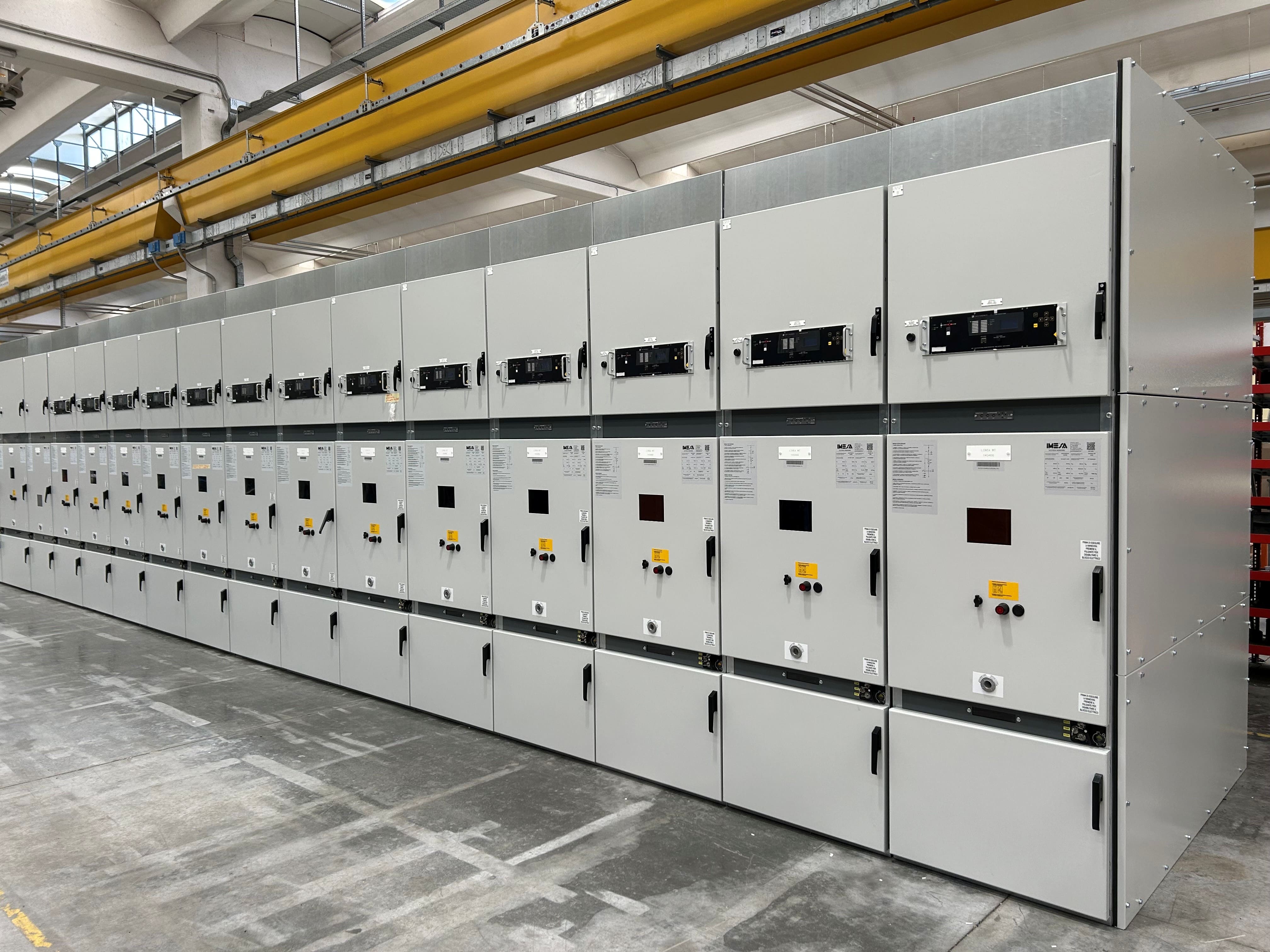

When designing medium-voltage electrical substations, the choice of the distribution panel directly impacts the reliability, operational safety, and integration of the system within the installation context. AIS, GIS, and Eco-friendly gas-insulated switchgears meet different technical requirements and are adopted based on well-defined design constraints.
Understanding the differences between these solutions is essential to identifying the technology best suited to the system’s characteristics and long-term objectives.
AIS switchgears: characteristics and areas of use
AIS (Air Insulated Switchgear) switchgear uses air as an insulating medium between live parts. It is a well-established technology that is widely used in electrical distribution networks and industrial plants. Air insulation requires greater distances between components, resulting in a larger footprint than other solutions. For this reason, AIS switchgears are particularly suitable in contexts where the available space does not represent a design limit. Operationally, they offer good accessibility to components and simplified maintenance, which are appreciated in many industrial applications.
GIS switchgears: gas insulation and compactness
GIS (Gas Insulated Switchgear) switchgear instead of air, they use a gas with excellent dielectric properties, traditionally sulfur hexafluoride gas (SF₆) , in sealed metal casings. This configuration allows for a drastic reduction in the size of the panel, making GIS technology suitable for installation in small spaces or in environments with critical operating and/or atmospheric conditions. GIS switchgears guarantee high levels of reliability and protection from external agents, such as humidity and contaminants. For this reason, they are used in urban substations, complex industrial plants and strategic infrastructures. However, the management of insulating gas requires specific procedures and careful compliance with current environmental regulations.
Eco-friendly gas-insulated switchboards: technological evolution
Eco-friendly gas-insulated switchgears represent an evolution of traditional GIS switchgears. In these solutions, SF₆ is replaced by alternative gases with a reduced environmental impact, while maintaining comparable electrical performance.
The adoption of Eco-friendly gases responds to sustainability needs and increasingly stringent European regulations regarding climate-altering emissions. This technology is particularly relevant in projects aimed at energy transition and reducing the environmental footprint of electrical systems.
Technical differences between AIS, GIS, and Eco-friendly gas panels
The main differences between the three types concern:
● the insulating medium (air or gas) used in the internal compartments;
● the size and footprint of the equipment;
● the environmental impact;
● the installation context.
AIS switchgears prioritize simplicity and accessibility, for maintenance or replacement of components, while GIS switchgears offer compactness and protection. Eco-friendly gas switchgears are an intermediate solution, combining compactness and environmental considerations.
Criteria for choosing the electrical swtichgear
The choice between AIS, GIS, and Eco-friendly gas-insulated switchgear depends on multiple factors, including:
● Available space in the cabin;
● Environmental conditions;
● Service continuity requirements;
● Regulatory and environmental constraints;
● System evolution prospects.
During the design phase, it is essential to evaluate the entire life cycle of the equipment, not just the initial installation.
IMESA’s approach to the design of electrical switchgears
IMESA designs and manufactures AIS and Eco-friendly electrical switchgears for primary and secondary medium voltage applications, with a constant focus on safety, reliability, and evolving industry regulations. Experience gained in various application contexts allows us to support the selection of the most suitable technology, both for traditional systems and for environmentally sustainable solutions.