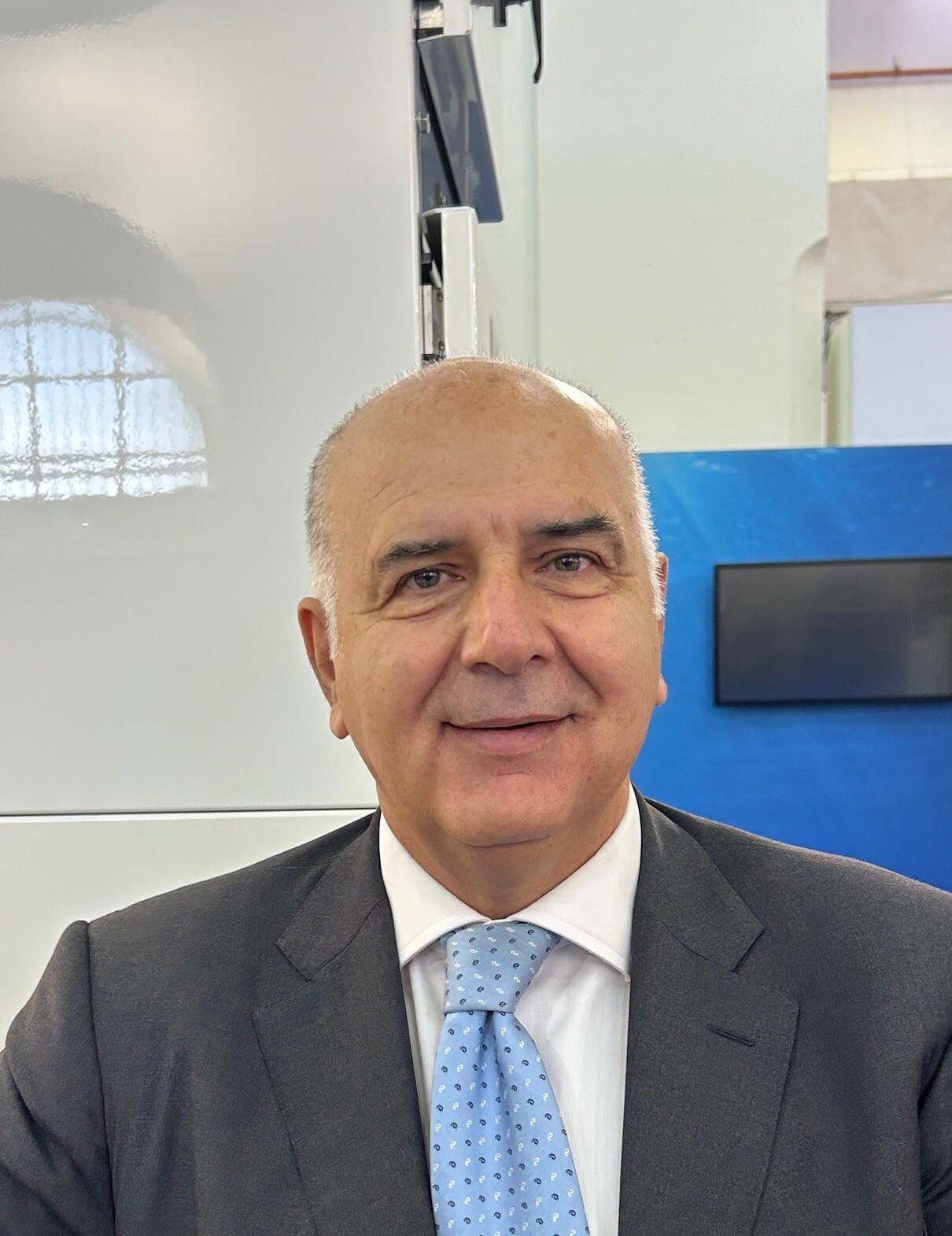

Marco Achilli, CEO of Imesa
In the industrial world, and particularly in the energy and utilities sector, the word innovation is often overused. In most cases, it is automatically associated with more technology, more features, more components and, almost inevitably, higher costs.
But are we sure that innovation always means adding complexity?
After years of product development and daily interaction with customers, EPCs, utilities, and installers, I have come to a very clear conclusion: true innovation is not about adding, but about simplifying.
This is the principle that guides our design approach at IMESA.
Where this vision comes from
This idea is not new. I learned it in the late 1990s, when I was working as a Product Manager at ABB.
During those years, I repeatedly observed the same pattern: increasingly sophisticated products, new features introduced one after another, and constantly rising costs. On paper, everything seemed to improve. In reality, however, one fundamental question remained: did all this added value truly serve the customer?
That’s when I understood a principle I still consider valid today: the best innovation is the one that eliminates the unnecessary, not the one that accumulates it.
When innovation becomes synonymous with complexity
In the electrical sector, this issue is even more relevant today. Regulatory changes related to fluorinated gases have pushed the market to accelerate toward alternatives to SF₆—a necessary and correct transition.
However, many operators have responded by simply replacing one technology with another, without truly rethinking the product logic. In many cases, this has led to solutions based on pressurized dry air, complex sealed systems, and architectures that replicate past approaches using new technologies.
The result is often evident: more complex, more expensive products, harder to manage, with greater uncertainty in terms of maintenance and long-term reliability.
This is exactly where we need to stop and reflect: if the function is simple, does it really make sense to complicate the solution?
The disconnector case: a simple function should remain simple
A concrete example is the disconnector, particularly the load break disconnector.
Its function is clear: to open and close a circuit, ensure isolation, and operate safely. It is not designed to handle complex protection logic or interrupt high short-circuit currents—that is the role of the circuit breaker.
For this reason, the disconnector is, by nature, a simple device. And it is precisely from this functional simplicity that design should begin.
When it is instead pushed toward pressurized, sealed, or overly sophisticated solutions, an industrial paradox emerges: a component that should be essential and competitive ends up resembling a circuit breaker, with costs and complexity that are not aligned with its function.
Designing from function, not technology
At IMESA, we have chosen a clear approach: start from the product’s function, not from the appeal of technology for its own sake.
A concrete example is the work developed on the off-load disconnector. The goal was not to add elements, but to achieve maximum simplicity, integration, and efficiency.
One of the key aspects of the project was compactness. We developed the product with a pole distance of 230 mm, exactly the same as the circuit breaker, allowing perfect integration within the same switchgear architecture.
This may seem like a technical detail, but its industrial value is clear. This choice enables fewer variants, a more linear layout, a more standardized platform, greater production efficiency, and simpler management for designers and installers.
For me, this is real industrial innovation: when a design choice simplifies work across the entire value chain and generates tangible value.
Innovation does not mean complication
One of the most common mistakes in our sector is confusing innovation with complexity.
A technology is truly innovative when it reduces the number of components, increases reliability, simplifies maintenance, lowers the total cost of ownership, and is understandable in the field by those who install, operate, and maintain it.
It is not innovation, however, when unnecessary technological layers are added, existing solutions are replicated at higher cost, or complexity is shifted from the problem to the solution.
True innovation is not meant to impress. It is meant to work better—with greater balance, efficiency, and less waste.
JesAir: innovation by subtraction
With JesAir, at IMESA, we have taken this philosophy to its most concrete conclusion.
The goal was to address regulatory and technological change without falling into the trap of overcomplicating the product. For this reason, we chose a clear path: elimination of SF₆, no unnecessary pressurization, a transparent architecture, and clear separation of functions.
The result is a product that complies with regulations, maintains operational simplicity, reduces complexity, and optimizes costs.
In short, innovation built by subtraction, not addition.
When innovation does not create value, the market slows down
When innovation increases costs without generating proportional value, the issue goes beyond the individual product—it becomes systemic.
Installers lose competitiveness. Utilities are forced to pay more for the same function. Adoption slows. And over time, mistrust toward technology grows.
This is a real risk, because it leads to a dangerous effect: innovation is perceived as a problem, not a solution.
To avoid this, we must return to a clearer industrial logic: innovate only where it truly matters, and do so in a way that simplifies work rather than complicates it.
The role of European manufacturers in the electrical sector
Today, the European electrical sector faces decisive challenges: electrification, integration of renewables, development of storage systems, and grid resilience.
To address them, introducing new technologies is not enough. We need real industrial innovation—capable of making infrastructure simpler, more scalable, more reliable, and economically sustainable.
If we want to accelerate grid development, we cannot afford to complicate it at the very moment we need to make it more accessible and efficient.
Returning to the essence of engineering
Engineering, in its most authentic form, means solving problems in the simplest and most effective way possible.
Not in the most sophisticated way.
Not in the most eye-catching way.
Not in the most technology-heavy way.
It is a lesson I learned over thirty years ago, and one that continues to guide our work at IMESA today.
This is why I believe the sector needs a different approach: less technological marketing, more industrial substance; less complexity, more real value.
Because true innovation is the one that simplifies the lives of those who use our products, reduces system costs, and helps make energy more accessible and sustainable.
Marco Achilli
FAQ
Why can simplifying an industrial product be a better choice?
Simplifying an industrial product means reducing variants, eliminating unnecessary components, and avoiding needless complexity. This leads to tangible benefits: higher reliability, lower costs, easier maintenance, and better integration into production and installation processes.
What does innovation really mean in the electrical sector?
In the electrical sector, innovation does not necessarily mean adding more technology or more components. True innovation improves reliability, ease of use, maintenance, and total cost of ownership.
What is the problem with overly complex innovation?
When innovation increases costs without creating proportional value, the market slows down. Installers, utilities, and designers end up managing products that are more expensive and harder to maintain, without real functional benefits.
Why has the SF₆ topic changed the electrical sector?
The phase-out of SF₆ has pushed the sector to seek new technological solutions for electrical equipment. However, the key point is not just replacing one technology with another, but doing so without introducing unnecessary complexity.
What does it mean to design starting from the function?
Designing from the function means developing a product based on what it actually needs to do, avoiding the addition of non-essential technological solutions. This approach improves efficiency, design clarity, and industrial value.
How does simplification create value for utilities and installers?
Simplification creates value by making products easier to integrate, install, manage, and maintain. It reduces time, costs, and margins for error, while improving competitiveness across the entire value chain.